The Monthly Dose: April 2026
Posted by Jorge Francisco on
The Monthly Dose
April 2026
Insights, advocacy, and updates from NBPAS
From the NBPAS Desk
When a Profession Becomes a Closed Loop
Every so often, news outside of medicine shines a light on something physicians have been feeling for years. This month was one of those moments. A federal jury found that Live Nation and Ticketmaster operated as an illegal monopoly that harmed consumers. Around the same time, the Federal Trade Commission endorsed efforts in Texas to reduce the American Bar Association's control over bar admission pathways. Different industries, but the same underlying concern: when one private organization gains too much control over who gets access, how they stay in, and what it costs to participate.
Monopolies rarely announce themselves. They grow quietly through policy, habit, and dependence. The same institution sets the standards, controls the pathway, collects recurring fees, and labels competitors as unacceptable. Over time, people stop questioning the structure because it feels permanent. What began as good intention becomes a closed and exclusionary loop.
Medicine should ask the same question. The American Board of Medical Specialties and its member boards hold extraordinary influence over hospital bylaws, insurance participation, employment opportunities, and physician employment, while also benefiting financially from the ongoing certification system tied to that influence. Whether one agrees or disagrees with ABMS and its certification maintenance programs, no system should exert total control or be beyond scrutiny. When one organization controls both the pathway and the tollbooth, it is fair to ask who the system is truly serving. NBPAS has submitted a white paper to the Federal Trade Commission and will continue shining a light on anti-competitive practices that limit physician choice, harm the profession, and the patients that you serve.
Advocacy Updates
Texas Update: Strong Support, Narrow Margin
We want to thank the physicians across Texas who stepped forward to support Resolution 202 at the Texas Medical Association's annual House of Delegates meeting. Resolution 202, Ending Mandatory MOC to Advertise as Board Certified in Texas, would have required the TMA to support efforts to amend Texas Medical Board rules regarding advertising as board certified in Texas for NBPAS-certified physicians. While the resolution did not pass this year, the final vote was close, with 48% in favor and 52% opposed—a clear sign that momentum is building and that many physician leaders recognize the need for a more fair and modern approach to continuing board certification.
Most importantly, this conversation is far from over. Texas physician advocates are already planning next steps. We are grateful to everyone who voted, spoke up, attended, and helped move this issue forward. Meaningful change often starts with close votes like this one.
One thing that you can do now is become active in your county medical society. County societies each send voting representatives to House of Delegates meetings and your voice absolutely can make a difference. Every voting delegate matters and you can lead change in your county which will ultimately turn the tide.
Physicians Corner
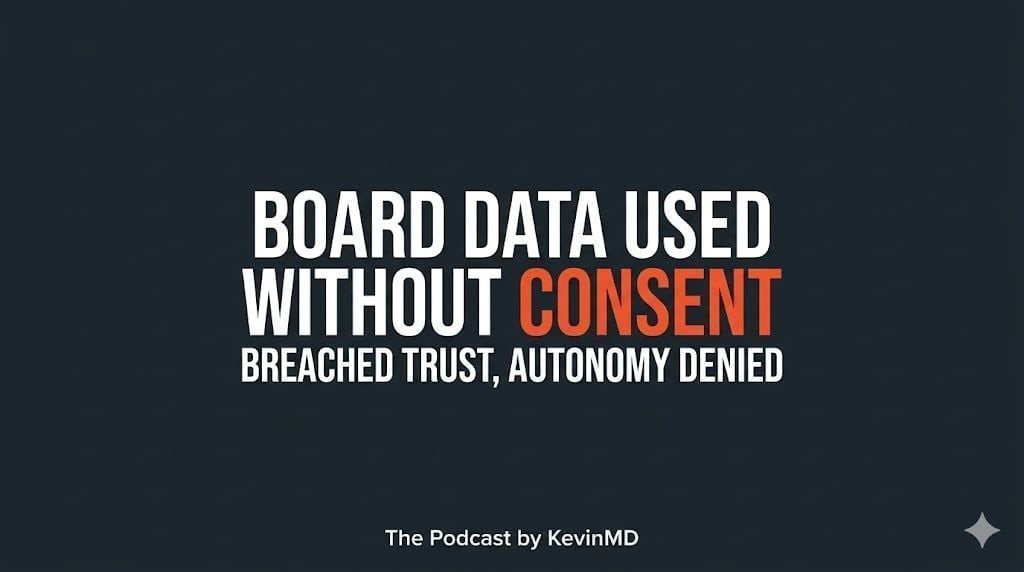
"When Certification Data Becomes a Trust Issue"
In this month's Physician Corner, James Rudolph, MD raises a provocative question: should a certifying board be able to use physician examination performance and link it to Medicare claims data for research without explicit physician consent? His recent KevinMD article argues that the issue is bigger than data use alone. It is about autonomy, transparency, and whether organizations that hold significant professional power should be held to a higher ethical standard.
Dr. Rudolph also highlights the broader concern of structural conflicts, when the same organization acts as gatekeeper, data steward, researcher, and promoter of the conclusions drawn from that data. Whether readers agree with every point or not, the article underscores a growing frustration among physicians: trust erodes when oversight bodies appear insulated from the standards they expect others to follow.
As debates around board certification continue, voices like this remind us that physicians are asking deeper questions not just about cost or burden, but about fairness, consent, and accountability.
Read it. Share it. Start the conversation.
Share Your Perspective
If you have a perspective on Maintenance of Certification (MOC) and how it affects your practice, we invite you to share your experience and insights with the NBPAS community. Send your article to info@nbpas.org
What's New at NBPAS
Updates to the Verify Certification Page
We've made some improvements to our Verification page to make things easier for hospitals and medical staff reviewing NBPAS certification.
Verification, documentation, and supporting materials for credentialing needs are now all in one place. We've also expanded search options so NBPAS-certified physicians can be looked up by name, NPI number, or Certificate Number. This is designed to make verification faster, easier, and more efficient for credentialing teams.
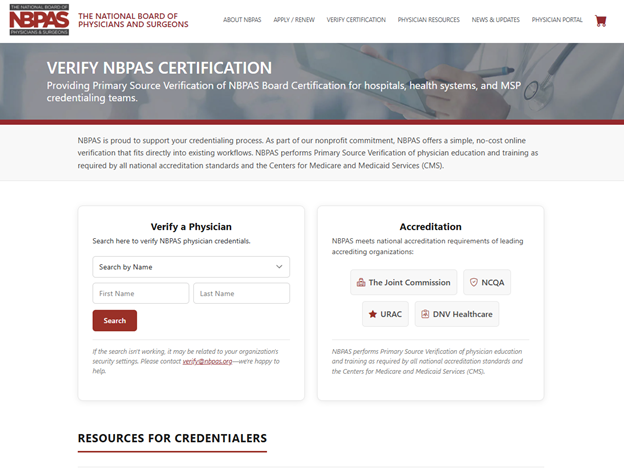
If helpful, feel free to share this page with your credentialing team or medical staff office.
We also welcome your feedback if you have a chance to take a look.
Physicians Supporting Physicians
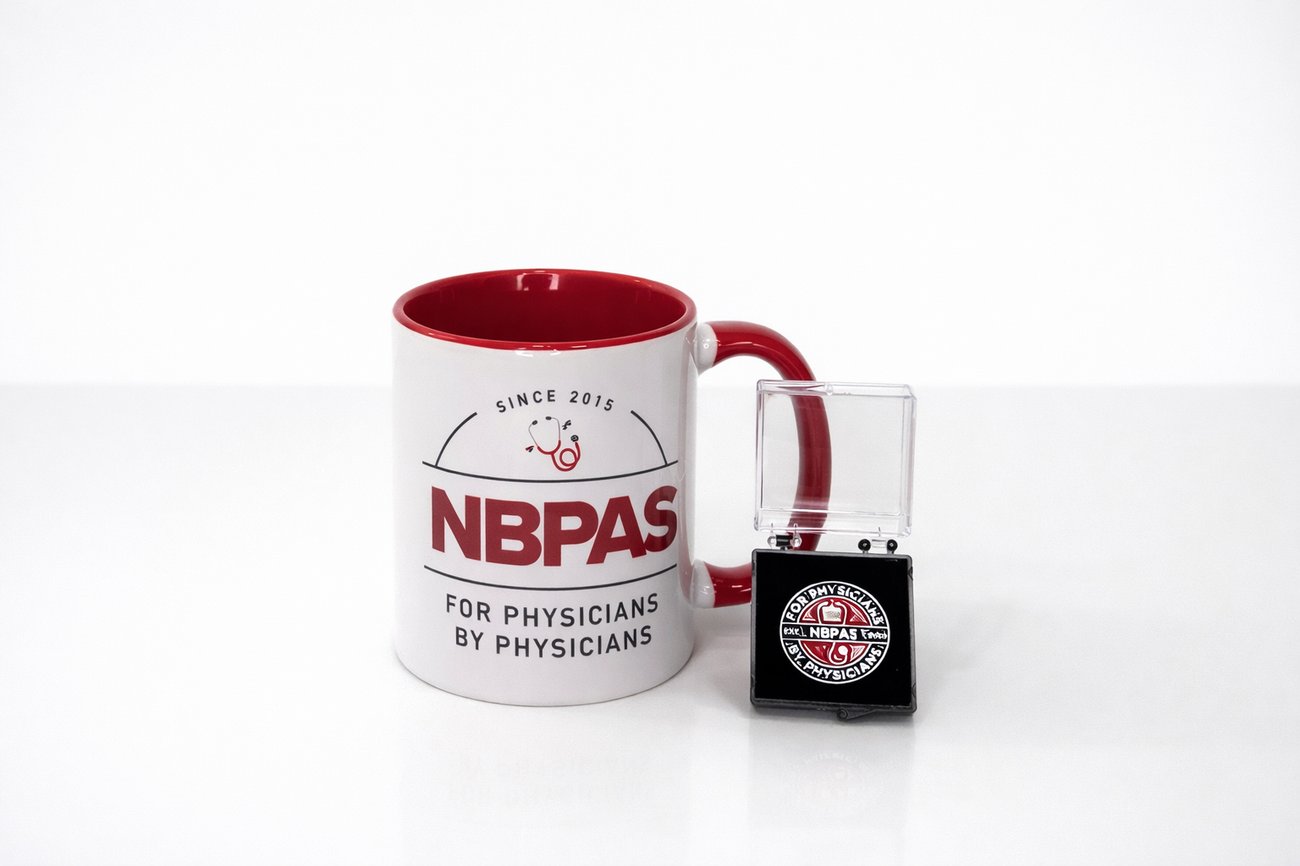
We'd love to see how you're showing your NBPAS pride! Feel free to send us an email with a photo or tag us on social media.

Not yet a Diplomate?
Apply for NBPAS Certification today.
The process is simple and takes less than 6 minutes to complete. Requirements include initial certification from an ABMS or AOA board, an active/unrestricted medical license, and 50 hours of specialty-specific Category 1 CME within the past 24 months.
Suggestions
Have an idea, need help? Reach out to NBPAS at
info@nbpas.org.
Someone from the team will be happy to get back to you.